Executive insights
Leading from the front: How revenue leaders at PayPal, Wayfair, and Twilio drive transformational change using AI

Craig Hanson
Sr. Director, AI Market Strategy
Published on: January 28, 2026
Last modified on: March 4, 2026
A new phase of AI is underway.
The first wave of AI for revenue was about intelligence, the gathering and summarizing of data. The second wave focused on efficiency, using generative AI and copilots to automate burdensome tasks.
Today, we’re in the midst of a third phase: Action and orchestration. AI is no longer just surfacing information; it is taking agentic actions and managing complex, multi-step workflows. To be effective, AI must now be embedded directly into a team’s operating rhythm, moving from a supplemental tool to the engine driving the business.
This dramatically raises the bar of what’s possible for — and what’s required from — both the AI systems we use and us as leaders.
Achieving this transition successfully is what transforms organizations from the old ways with AI layered on top to natively AI-powered companies that operate at a fundamentally different level of velocity, scale, and effectiveness.
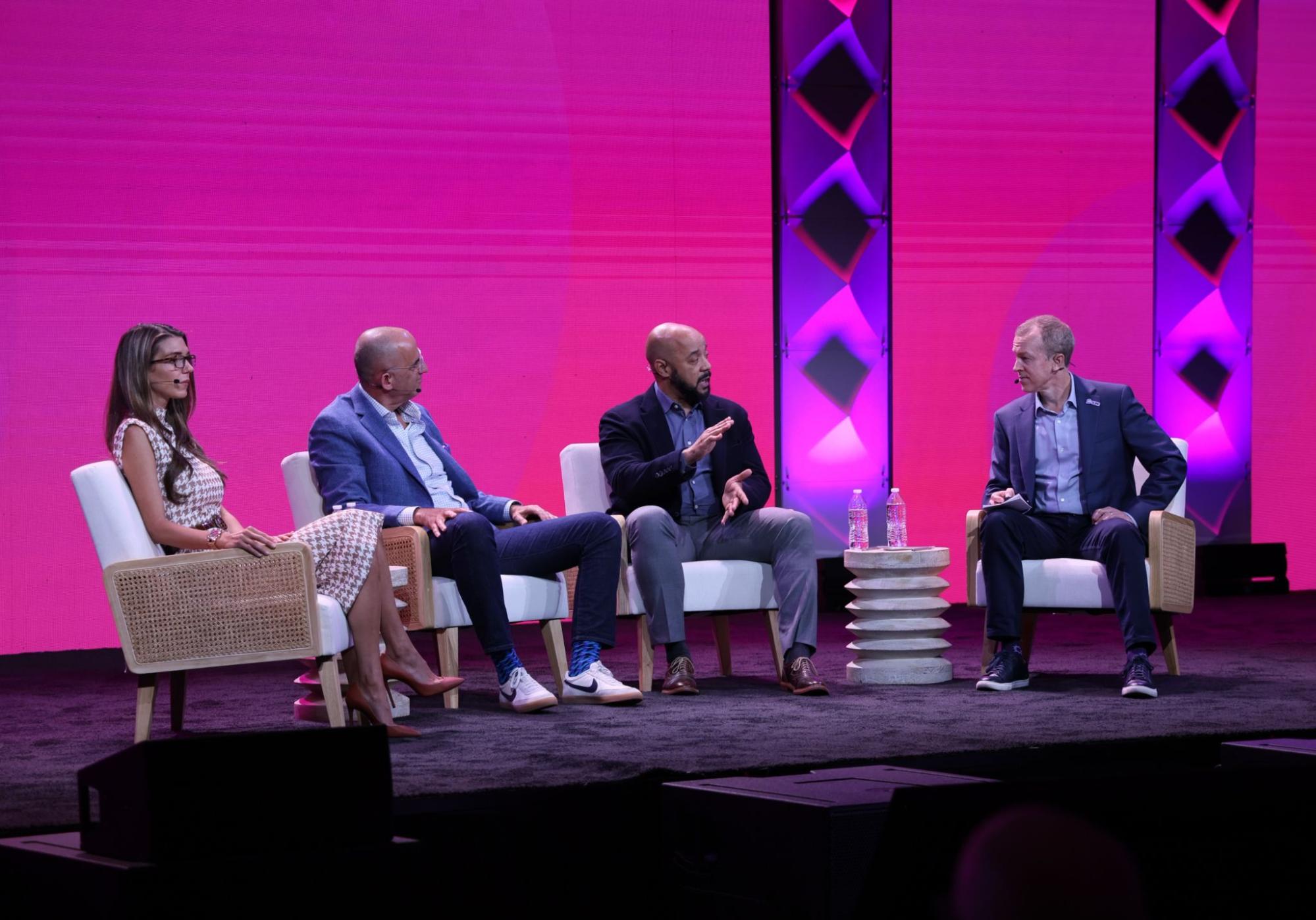
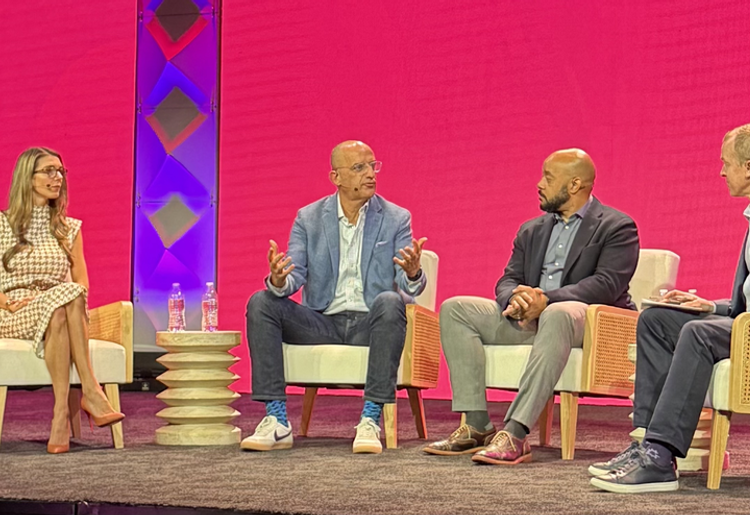
I recently sat down on stage with three key leaders, hand-picked for their leadership and experience in this area, to learn about how they’re approaching the transition and ways that they’re embedding AI into their revenue motions for greater insights, efficiency, and orchestration.
“Lead from the front. Don’t be shy to break things and do things differently.”
— Eitan Saban, Head of North America SMB Sales at PayPal
1. Scale high-performance sales DNA with AI coaching
Historically, coaching has been manual and subjective. Many sellers, especially tenured ones, can become defensive when receiving feedback based on intuition. AI changes the dynamic by providing unbiased, data-driven insights that standardize best practices across the team.
Lindsey Katalan, RVP Enterprise Sales at Twilio, uses AI to transform coaching from an ad-hoc task into a scalable practice. She started by using the AI to track the usage of key behaviors at scale, and then used this data-driven approach to coach the specific actions that she knows lead to results.
- Drive methodology adoption: Twilio uses the Challenger methodology, in which a crucial aspect is creating healthy tension to progress deals. Gong’s depth of AI understanding helped to discern when this dynamic was occurring. The AI flagged that Lindsey’s team wasn’t pushing back enough on objections, allowing her to provide specific, data-backed course corrections.
- Address power dynamics: In complex deals involving multiple partners, it’s vital to know who is "holding court." AI identifies who is in charge of the conversation, and if it’s moving forward with purpose on the intended path, ensuring her sellers maintain control.
“Coming to the table with insights has revolutionized my conversations with reps,” Lindsey noted. “They are less resistant to change because the data is the truth.”
"I'm from New York — I walk fast, I talk fast, and I need answers really fast. Gong has all the answers. If I'm on a global forecast call, my whole team has to have Gong open."
— Lindsey Katalan, RVP Enterprise Sales at Twilio
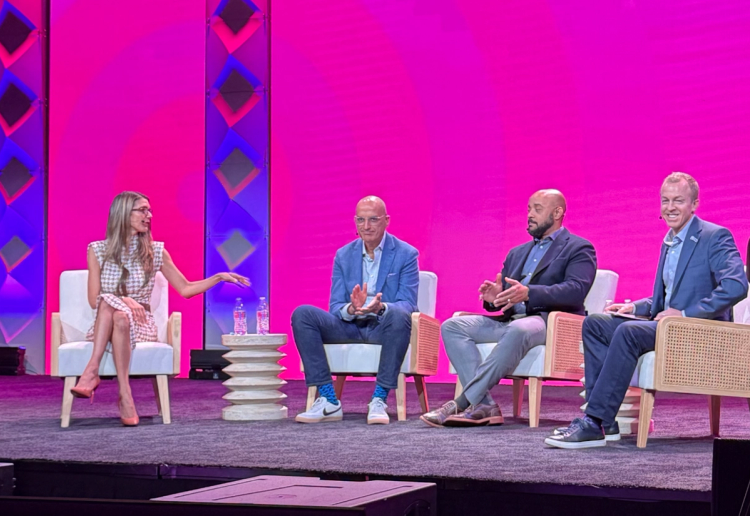
Keith Reynolds, General Manager, Professional Sales at Wayfair, has led the company to leverage AI to make managers more efficient in coaching at scale, instead of requiring them to listen to hours of calls each week. In turn, Wayfair’s closed-won rate has increased alongside this greater efficiency and effectiveness.
Next, these leaders plan to orchestrate their coaching and guidance with Gong’s agentic AI workflows. By setting an AI agent to assess their team’s calls, it can use the in-depth questions they typically would ask, then automatically provide feedback aligned to the best practices the team was trained on. Even more, they plan to use Gong’s AI to train, practice, and certify reps to sharpen their skills ahead of time.
Eitan Saban, Head of North America SMB Sales at PayPal, explained the next phase clearly: “The ability to orchestrate all of the actions that are required to progress and drive the outcome at the right time, that's the next mountaintop for all of us to climb.”
2. Achieve radical truth in pipeline health
As pipelines scale, they undergo rapid and frequent changes that increase their complexity. It becomes more difficult over time for leaders and managers to access the signals they need to forecast accurately amid all the noise.
Eitan faced exactly this kind of visibility gap at PayPal: Deals were stalling between when the merchant signed and when they started processing payments, which is a key step for PayPal’s revenue. Stalls were leading directly to slipped forecasts. But when AI captures, understands, and makes determinations on vast quantities of data, the noise is transformed into actionable insights.
“Forecast accuracy is a key element for any financial services organization, but in particular at PayPal when we're focused on multi-product selling. With an increase of a little shy of 20% accuracy in the revenue forecast and a 20% revenue increase, underneath that, there is a cultural shift in the ownership that Gong helped us to drive throughout the conversation.”
— Eitan Saban, Head of North America SMB Sales at PayPal
Eitan’s team used Gong’s AI to discern moments where prospects indicated any behaviors that the insights told them led to stalling, like if a merchant expressed hesitation. He and his org set up the AI to generate automated deal alerts, then guide the team with best-practice follow-ups.
This resulted in 22% faster time to revenue and a 17% increase in forecast accuracy.
Similarly, Keith employed AI throughout Wayfair’s sales process to identify themes, risks, and opportunities that arise, then orchestrate actions to capitalize on them. For example, Keith is better able to qualify pipeline by setting an AI agent to determine for him how well Wayfair’s reps were sticking to the org’s BANT methodology: “Using the AI capabilities in Gong, I'm equipped to know exactly what's going on with the top ten deals that I review weekly,” he said.
“We saw a double-digit increase in our year-over-year sales growth that accelerated as Gong became part of our operating rhythm, so I know that our sales transformation is working.”
— Keith Reynolds, General Manager, Professional Sales at Wayfair
3. Engineer a top-down AI culture
Finally, each of these three leaders addressed how widespread AI adoption is fundamental to their orgs. Adoption is more than a software rollout; it’s a behavior change. So leaders must become champions to ensure lasting impact.
Success here hinges on three pillars:
- Lead change from the front: Leaders at every level must model desired behaviors. From SDRs to the CRO, everyone must be accountable for using AI-powered capabilities to drive outcomes. As Eitan said, “Lead from the front. Don’t be shy to break things and do things differently.”
- Embed the technology in your team’s workflows: Capture and use data until it becomes a habit. For example, Lindsey runs Twilio’s internal meetings using Gong Deal Boards and expects managers to do the same. This way, the entire org is aligned and following the same playbook.
- Make change a mandate: Change can’t be optional. The organization must become AI-powered as a whole to be effective. When Keith rolled out Gong at Wayfair, he joined every call with his Gong mug — a simple yet effective reminder that change was coming and the team needed to get on board.
“Make sure everyone understands the new path forward, share the expected return, and work with early adopters to evangelize new technology.”
— Keith Reynolds, General Manager, Professional Sales at Wayfair
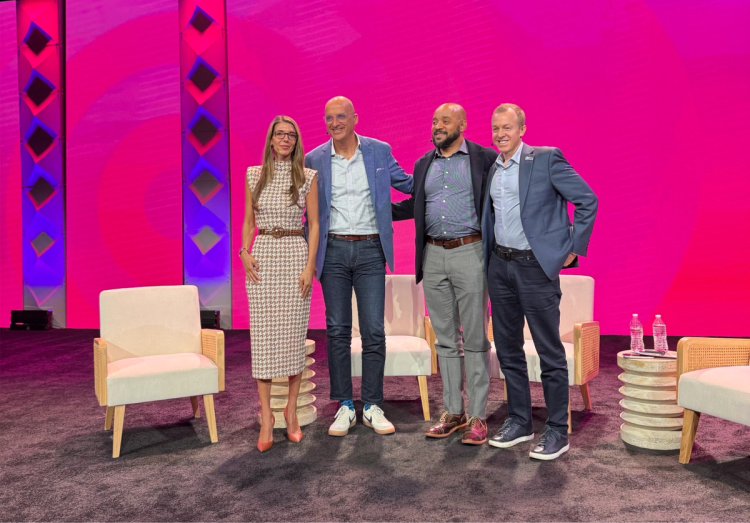
Winning in the era of AI orchestration
AI is no longer just filling data gaps; it is driving change at scale. However, it only works when it is fully embedded in your daily workflow.
To succeed, revenue leaders must define the "why,” whether that’s improving coaching consistency or shortening sales cycles, and build AI into the very fabric of their processes. The leaders at Twilio, PayPal, and Wayfair have shown that when AI moves from a tool to an orchestrator, the entire organization operates at a fundamentally higher level of velocity and effectiveness.
Check out my full conversation with Lindsey, Eitan, and Keith for more key insights, and watch all the on-demand sessions from Celebrate here.
Sr. Director, AI Market Strategy
Craig Hanson is an AI strategy and growth leader with deep experience in go-to-market, corporate development, and venture capital.
At Gong, he has helped shape the company’s AI platform strategy, drive international expansion, and guide transformative customer growth.
Craig is also a former VC investor with a proven track record in scaling technology startups.
Win more with Gong
Loading form...
Discover more from Gong
Check out the latest product information, executive insights, and selling tips and tricks, all on the Gong blog.